SARMs Research: Industrial Grade Compounds for Advanced Androgen Studies
Selective Androgen Receptor Modulators (SARMs) represent one of the most rapidly evolving and scientifically significant fields in modern pharmacological research, offering unprecedented tissue-specific modulation of androgen receptor pathways. The global market for research-grade SARMs continues to expand exponentially, with projections indicating substantial growth as researchers increasingly recognize the potential of these compounds to selectively activate androgen receptors in muscle and bone tissue while minimizing effects on other androgen-responsive tissues. For research institutions seeking to advance our understanding of androgen signaling and tissue-specific hormonal effects, access to high-purity, industrial-grade SARMs is not merely beneficial—it’s essential for producing reliable, reproducible results that can withstand scientific scrutiny.1 2
The tissue-selective properties of SARMs demand precision in every aspect of experimental design. From receptor binding affinity and transcriptional activation to downstream signaling cascades and tissue-specific expression patterns, each step in the androgen receptor signaling pathway involves intricate molecular events that researchers must navigate with care. Swissyneu.com provides researchers with the chemical tools necessary to probe these androgenic pathways with the accuracy required for modern hormonal studies, ensuring that experimental outcomes reflect true biological effects rather than artifacts of impure or inconsistent reagents.3 4
Classification and Mechanisms of Action
SARMs can be broadly categorized into several distinct classes based on their chemical structure, receptor binding characteristics, and tissue selectivity profiles. Nonsteroidal SARMs represent the most extensively studied category, encompassing compounds with diverse chemical scaffolds that selectively bind to androgen receptors while avoiding conversion to other hormones or metabolites. Their distinct chemical structures from endogenous androgens contribute to their tissue-selective properties and favorable safety profiles in research settings.5 6
Steroidal SARMs, though less commonly investigated than their nonsteroidal counterparts, represent an important category of research compounds. These molecules are derived from the testosterone structure but modified to enhance tissue selectivity, often through strategic functional group additions that alter receptor conformation and co-regulator recruitment. These structural modifications provide researchers with valuable tools to investigate the molecular determinants of tissue-specific androgen receptor activation.7 8
The tissue-selective mechanism of action that distinguishes SARMs from traditional anabolic agents represents perhaps their most scientifically valuable characteristic. Unlike testosterone and other anabolic steroids that activate androgen receptors in all tissues, SARMs demonstrate preferential activation in muscle and bone tissue with reduced effects on prostate, skin, hair, and other androgen-responsive tissues. This selectivity appears to arise from differential expression of co-regulator proteins in various tissues, leading to tissue-specific transcriptional responses to receptor activation.9 10
Key Compounds in Contemporary SARMs Research
Several SARMs have established themselves as particularly valuable tools across multiple research domains. Ostarine (MK-2866), perhaps the most extensively studied nonsteroidal SARM, has demonstrated remarkable potential in research examining muscle protein synthesis, bone density maintenance, and functional recovery. Its favorable tissue selectivity profile and well-characterized safety data make it an indispensable tool for researchers investigating androgen receptor signaling in musculoskeletal tissues.11 12
Ligandrol (LGD-4033) has garnered significant research interest due to its potent anabolic effects on muscle tissue with relatively modest effects on prostate and other non-target tissues. Studies suggest it may significantly increase lean body mass and muscle strength while minimizing androgenic side effects, making it particularly valuable for research into muscle wasting conditions and functional optimization. For researchers studying sarcopenia and related conditions, high-purity Ligandrol provides an essential compound for experimental investigation.13 14
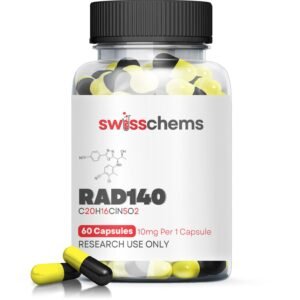
Testolone (RAD-140) has emerged as a SARM of particular interest for researchers investigating neuroprotective effects of androgen receptor activation. Studies suggest it may protect neural tissue from damage and enhance cognitive function while maintaining the anabolic properties characteristic of SARMs. The potential central nervous system effects of Testolone provide researchers with tools to investigate the role of androgen receptors in neurological health and function.15 16
Andarine (S4) represents another important research tool with unique characteristics among SARMs. Studies suggest it may have particular efficacy in promoting bone density and strength, making it valuable for research into osteoporosis and bone health maintenance. Its distinct tissue selectivity profile compared to other SARMs provides researchers with comparative tools to investigate the specific mechanisms underlying tissue-specific androgen receptor activation.17 18
Technical Considerations for SARMs Research
When implementing SARMs in research protocols, several technical factors require careful consideration. Purity standards are paramount, as even minor contaminants can significantly affect hormonal outcomes, particularly in sensitive assays measuring subtle changes in receptor activation or gene expression. Industrial-grade SARMs intended for research should exceed 98% purity, verified through analytical techniques such as HPLC, mass spectrometry, and NMR spectroscopy.19 20
Pharmacokinetic characteristics vary significantly between different SARMs, necessitating individualized dosing and monitoring protocols. Compounds differ in their absorption, distribution, metabolism, and elimination profiles, affecting optimal dosing schedules and tissue exposure. Researchers must establish appropriate pharmacokinetic monitoring to verify that their interventions produce intended receptor activation levels without excessive accumulation or unexpected metabolite formation.21 22
Receptor binding assays represent a critical component of SARMs research, particularly for investigating tissue selectivity mechanisms. Researchers must employ validated methods for measuring androgen receptor binding affinity, transcriptional activation, and co-regulator recruitment in various tissue types. These assays provide essential data for understanding how structural differences between compounds translate to differences in tissue-specific effects.23 24
Applications in Specialized Research Domains
The versatility of SARMs has led to their application across numerous specialized research domains. In muscle wasting research, for instance, SARMs provide valuable tools for investigating the mechanisms of muscle protein synthesis and catabolism. These studies often employ sophisticated assessments including muscle biopsies, strength testing, and molecular analyses of anabolic signaling pathways to evaluate the potential for preserving or restoring muscle mass in various conditions.25 26
Osteoporosis research represents another rapidly expanding application area for SARMs. Compounds that stimulate bone formation and reduce bone resorption through androgen receptor activation offer researchers multiple approaches to study the hormonal regulation of bone health. These studies often incorporate bone density measurements, histomorphometric analyses, and fracture risk assessments alongside hormonal measurements to evaluate skeletal effects.27 28
Neuroprotection research has increasingly incorporated SARMs as tools to investigate the role of androgen receptors in neurological health. The potential for SARMs to protect neural tissue from injury, support cognitive function, and potentially reduce the risk of neurodegenerative conditions provides researchers with novel approaches to study the androgenic system’s role in central nervous system health. These studies often incorporate cognitive testing, neuroimaging, and biomarker assessments to evaluate neurological effects.29 30
Procurement Strategies for Research Institutions
Sourcing high-quality SARMs for research requires careful evaluation of potential suppliers and comprehensive quality assurance protocols. Research institutions should prioritize vendors who provide complete documentation including certificates of analysis, batch records, stability data, and method validation information. This documentation should include not just purity data but also specific identification of stereoisomers, absence of related compounds, and verification of structural integrity.31 32
For bulk purchasers, establishing direct relationships with manufacturers can provide several advantages beyond cost considerations. These relationships often include access to technical support, custom synthesis capabilities, and priority allocation during supply shortages. However, quality assurance should never be compromised for economic advantages—the most reliable suppliers maintain transparent manufacturing processes, rigorous quality control protocols, and detailed documentation of synthesis and purification methods.33 34
International research collaborations introduce additional procurement complexities that must be carefully managed. Regulatory frameworks for SARMs vary significantly between regions, particularly regarding classification as research chemicals, prescription medications, or controlled substances. Suppliers with global distribution capabilities and experience navigating international regulations can significantly streamline these processes, preventing costly interruptions in research timelines.35 36
Emerging Frontiers in SARMs Research
The field of SARMs research continues to evolve rapidly, with several emerging frontiers showing particular promise. The development of SARMs with enhanced tissue specificity represents an exciting area of investigation. Structure-activity relationship studies, guided by advances in computational chemistry and receptor modeling, have enabled the design of compounds that target specific receptor conformations or co-regulator interactions with unprecedented precision. These next-generation SARMs may offer researchers more refined tools to investigate the specific mechanisms underlying tissue-selective androgen receptor activation.37 38
SARMs with dual activity or multiple mechanisms of action represent another emerging frontier. Compounds that combine androgen receptor modulation with other receptor interactions (such as selective progesterone receptor modulators or PPAR modulators) offer researchers tools to investigate the complex interplay between different hormonal signaling pathways. These multifunctional compounds may provide insights into how combined receptor activation might produce synergistic effects on muscle, bone, and other target tissues.39 40
The application of SARMs beyond traditional musculoskeletal indications has garnered increasing research interest. Investigations into potential applications in areas such as metabolic health, cognitive function, and immune modulation have expanded the potential research utility of these compounds. The pleiotropic effects of androgen receptor activation in various tissue systems suggest that SARMs may have broader research applications than initially envisioned, opening new avenues for scientific investigation.41 42
For educational purposes and research applications, Swissyneu.com provides comprehensive product information and technical specifications for various SARMs research compounds, serving as a valuable resource for researchers seeking reliable androgen receptor modulator supplies. Their commitment to quality assurance and technical support makes them an ideal partner for research institutions working with these specialized hormonal compounds.43
Showing all 9 results